
Contents
Go back to all case studies
My role
Lead UI/UX Designer
Industry
Healthcare
Product
iOS/Android/Web App
Duration
1.5 year+ | 2020
About
Creating a way for all healthcare professionals to manage their learning and career development activities in one place, so that they may see a overview of their professional profile and be able to manage it with little to no friction.
Impact
90%
reduction in licensing
update time
85%
increase in certification completion
70%
improvement in
user satisfaction

The Challenge
How can we help healthcare professionals manage, track their certifications and CME?
Healthcare professionals have a lot of documents that they need handy and must be regularly updated in order for them to practice. The area is too segmented and a unified ecosystem does not exist.
How we can make Healthcare worker’s lives more organized and help them increase efficiency by:

Giving them a platform to view and share their documents

Allowing them to update their certifications easily on a regular basis
The Process
Merging agile product development and lean UX for hands-on collaboration
We used an iterative product development method, merging the process of agile product development and lean UX, making UX designers apart of the core scrum team which helped technology and design teams collaborate in a more hands on method. We held sprint planning sessions & daily sprints which helped track the progress we were making. Held bi-weekly meetings to discuss/review the product roadmaps.
01
Research + Define
02
Design + Test
03
Deploy + Iterate
04
Measure + Grow
01 -- Research
Conducting business interviews and user research
UX research
Business interviews
Conducted business interviews with the CEO, the operations team, the business development team and other key stakeholders. Once I understood the business space and client goals, I was ready to use the user research to inform our design decisions.
Since the key stakeholders and CEO belonged to a set of the user cohort, their detailed explanation and walk through the current process helped me identify friction points and create initial hypothesis.
User research
The Product designer and I worked together to understand the key trends and how we can use that data to inform our design.
The interviews took part in March 2020 and I was able to go through the research and notes and understand the user needs and how they felt about the current process.
The Process
Stakeholder insights highlighted user needs for streamlined regulatory licensing updates and a convenient online certification process.
This helped us formulate our problem statement.
Problem Statement
02 -- Define
We were able to synthesize the data from the user interviews and used it to identify key trends
Product design & strategy
Trend #1
Healthcare Practitioners find themselves bogged down by regulatory and licensure requirements as well as administrative tasks often. Some HPS are provided support by their workplace, while others are even supported by their spouse to keep up.
Trend #2
Healthcare Practitioners would like to become more organized in theory, however; in reality they are unlikely to make the effort required to do so.
Trend #3
Healthcare providers reply on a variety of fragmented individual solutions for their learning, training, storage and tracking needs, for example: various subscription-based websites, conferences, hospital administrative office etc.
We found that the primary motivation of user’s is to be organized and find everything in one place so it is easier to keep track of their regulatory requirements and credits.
Problem Statement
How might we minimize the pain and time spent by healthcare professionals while applying for a certification or study to complete one and introduce functions that could further shorten their workflow and how might we help them stay organized with their documentation?
Solution #1
Offer a convenient online learning and certification process for healthcare professionals to keep up to date on their certifications and CMEs.
Solution #2
Empower them by giving them control of what they choose to add to track, learn and make it simple for them to take out outdated documents.
Solution #3
Communicate upcoming expiration dates clearly and use encouraging microcopy and UX writing.
Feature prioritization
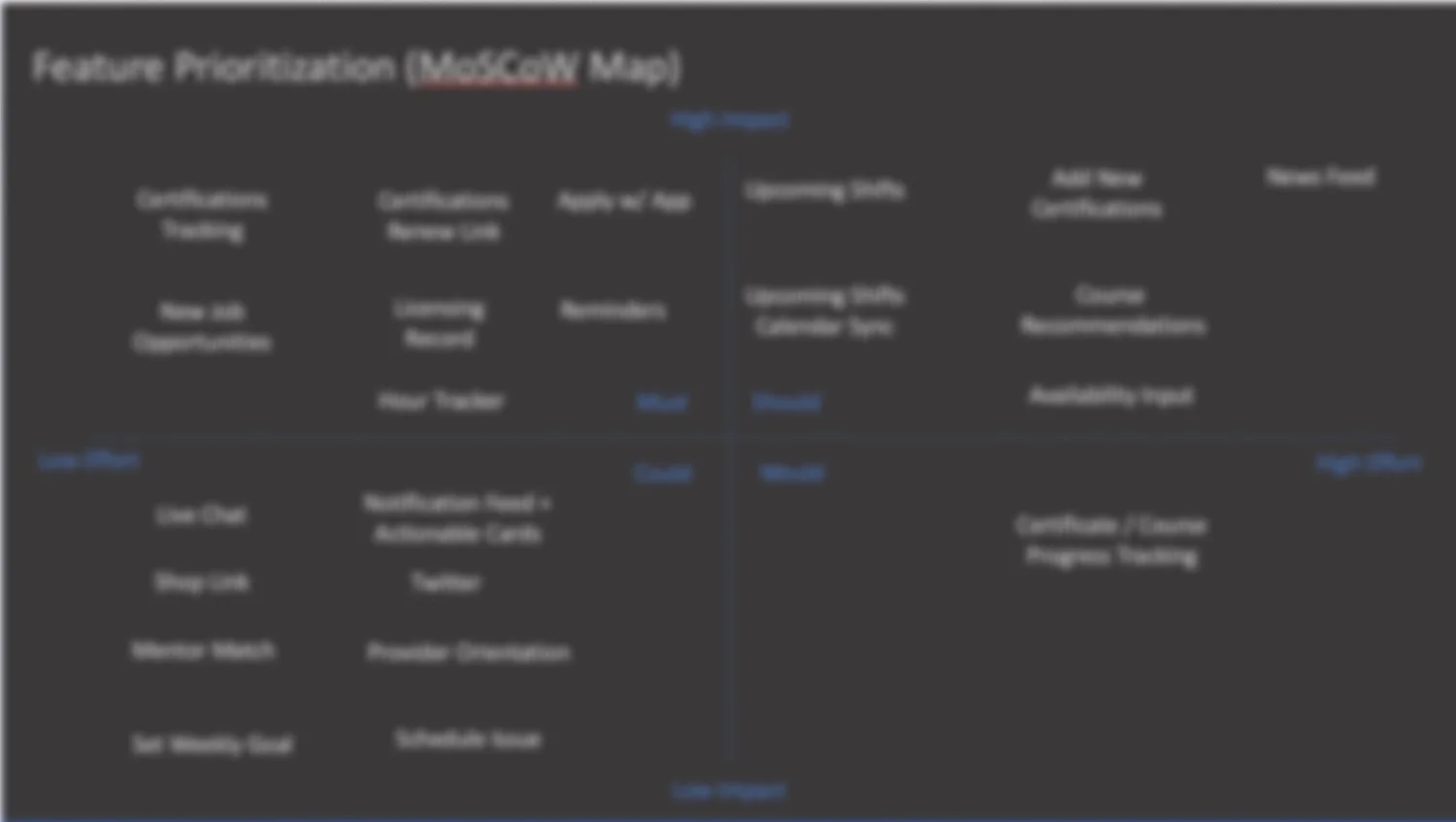
Using the MoSCoW prioritization technique we defined the features along with the product manager and product designer and business stakeholders. Each prioritized feature would then become apart of the sprint planning.
02 -- Design
Designing Medtigo’s visual identity: From branding to prototypes
Product design & strategy

Visual design
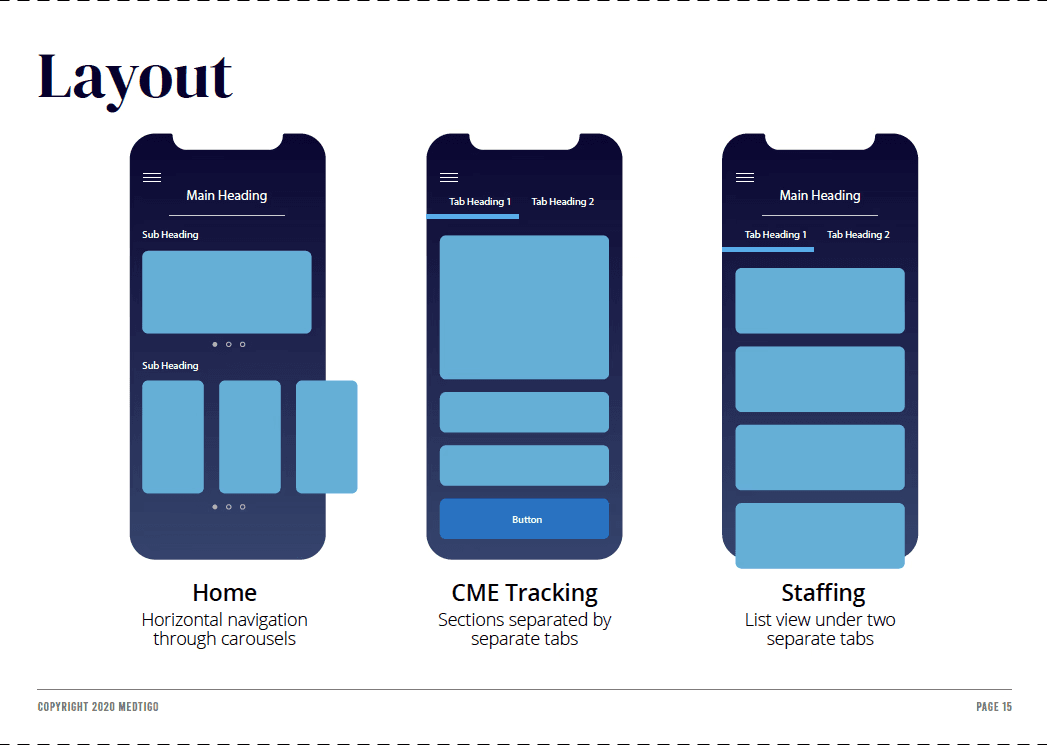
Using the data to inform our designs, we created mid-fidelity designs and iterated to reduce steps within the user flow and strip any complicated functions that would confuse the user. It took multiple iterations to finally find a flow that was simple and included all data required.
During the sketching phase colours were allocated to each of the expiration states to give the user a visual cue in addition to a written and hierarchal one, for the one of the main features, the tracker.
Illustrations
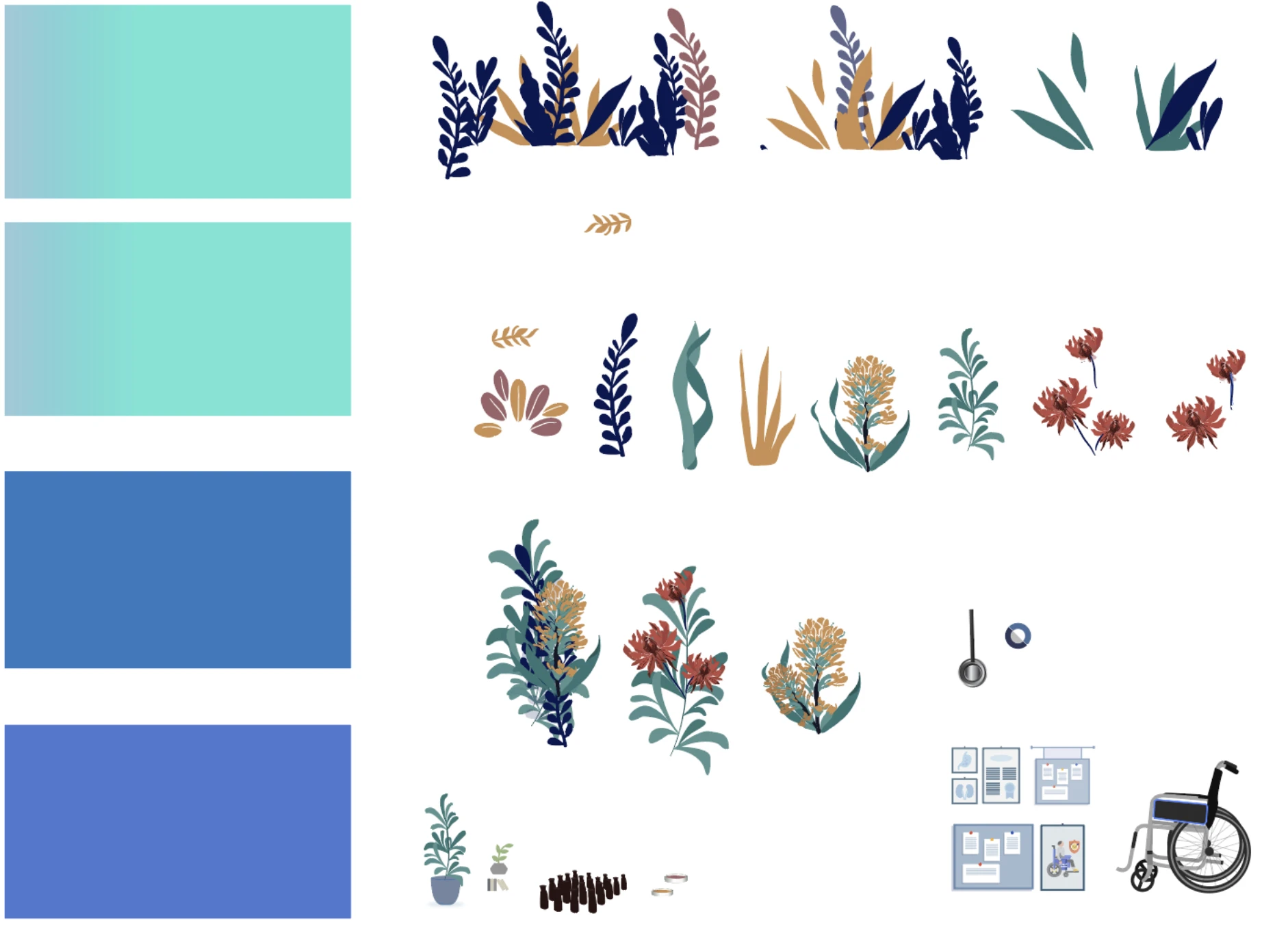
I defined the mood and colours for the custom illustrations that we would create. These illustrations would become an integral part of the brand identity for the company. I guided and worked with illustrators to set the visual identity for the custom illustrations, we predefined and created elements that would be reused in them.
Slide to explore Medtigo's brand elements
03 -- Deploy
Streamlining implementation with a style guide and documentation
Product design & strategy

Style guide
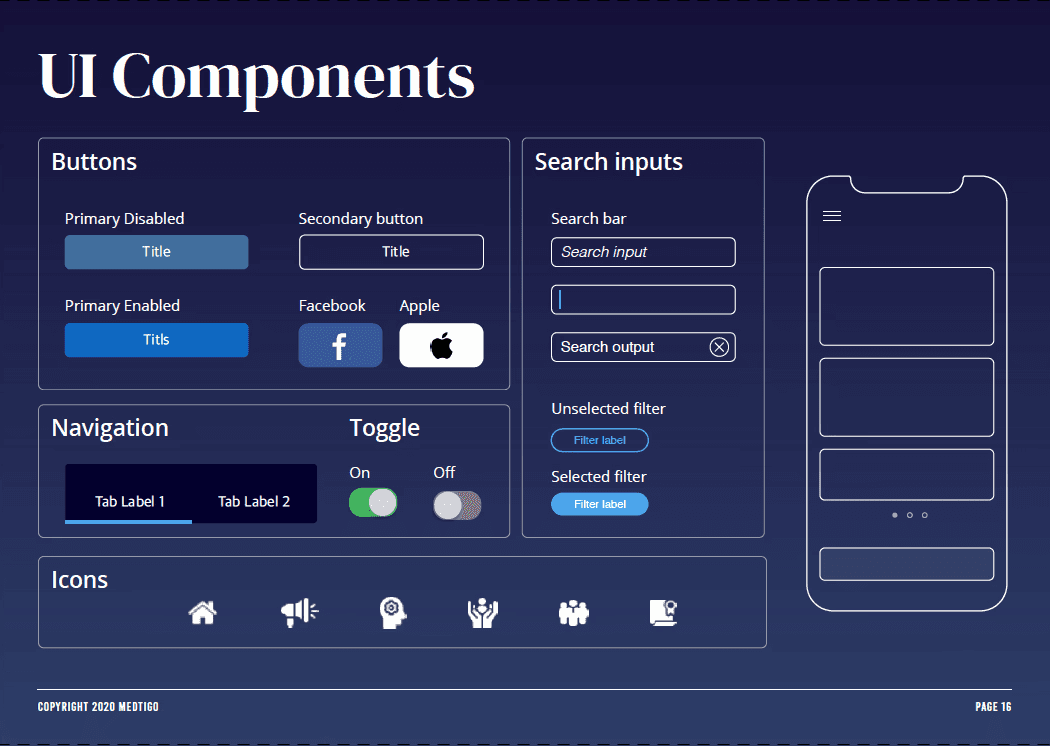
As our team expanded, we formalized the UI assets so that components could be reused, consistent, and to increase efficiency and collaboration amongst the UX/UI team. We still continue to refine this document and use it internally and are close to having a first version published as the first step towards a formal design system.
Hand-off documentation
As our team expanded, we formalized the UI assets so that components could be reused, consistent, and to increase efficiency and collaboration amongst the UX/UI team. We still continue to refine this document and use it internally and are close to having a first version published as the first step towards a formal design system.
04 -- Measure + Grow
Data-driven insights and strategic growth
Product design & strategy
Measure
I coordinated with in-house Business Intelligence teams and guided them to visually display the data and used the data to measure the impact of our design and leveraged these data points as well as user feedback to make needed iterations.
In order to study user retention by cohorts, I collaborated with the BI team to brainstorm and understand what data points were at our disposal and how we can use them to show user retention in addition to ways on how we could identify retention periods.The data also helped us observe user behaviour and identify user friction points, this further uncovered product growth and retention opportunities.
Product growth
After the MVP launch and once I was able to get data points for the performance, I worked on infusing growth, both within the product and by leveraging other channels like email marketing as well as social channels and making sure that our goals was communicated across company platforms and convergent to achieving one goal: Growth through experienced value.
As the lead UI/UX designer I created strategy decks for retention along with the product designer and led the effort to define subscription based models and how they would aid growth.
Currently there are over 16k app downloads and an NPS score of 58 with 68% of the respondents being promoters.
Results
Design hand-off was done using Figma and Zeplin to allow optimal collaboration with my development team.The hand-off documentation was a detailed document which outlined the business requirements for each of the feature user flows , had links to source files and any interactive prototypes as well as user stories. The cloud document also helped us iterate designs easily as we conducted usability tests and incase there were any technology constraints.
Impact
90%
reduction in licensing
update time
85%
increase in certification completion
70%
improvement in
user satisfaction